
A Path Worn by Generations
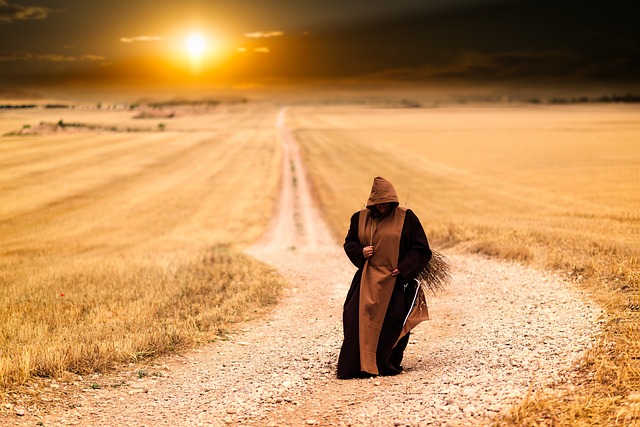
There is a moment, just before dawn, when the dusty road ahead feels like a living vein beneath your feet. The air still carries night’s chill, yet already the first murmurs of anticipation tremble through the crowd. You join the throng, each heartbeat echoing an ancient rhythm, and you realize that this pilgrimage is more than travel. It is the unfolding of a ritual that has stitched communities together for millennia.
Rituals That Move the Body and the Soul
Across the spectrum of Religion, the call to journey—whether to Mecca, Jerusalem, Varanasi, Santiago de Compostela, or a modest shrine at the edge of one’s village—reveals a universal human impulse. In participating, you become an actor in a grand liturgy of motion. Every step lengthens the prayer, every mile erodes the distance between the ordinary and the sacred. You notice how simple acts—drinking water from a common vessel, washing dusty feet in a river, sharing bread with a stranger—are transformed into potent rituals when performed on the road.
The Map Etched on the Heart
Maps can trace the route, but they cannot chart the subtle topography of longing that propels you forward. The formal elements of pilgrimage—chants, prostrations, incense—serve as signposts pointing inward. Somewhere beyond the next bend, the weight of daily concerns loosens, and memory itself begins to feel lighter. A silence settles in, not as absence but as invitation. It is here that the journey mirrors the inner terrain: the rocky doubts, the lush oases of insight, the plateaus of exhaustion that require nothing less than faith to cross.
Communion in Motion
Though each traveler bears a unique story—loss, gratitude, search, or celebration—the collective momentum forms a single living organism. In shared exertion, strangers become companions, and companions form an unspoken covenant. You learn to measure time in footsteps, to tell the hour by the angle of light striking a roadside shrine, to feel the pulse of humanity beneath your own ribs. The pilgrimage dissolves the boundaries of language, status, and nationality with every communal chant that rises into the sky.
Thresholds and Transformations
Arrival is never merely geographic. Crossing the threshold of the holy site, you pass through an invisible membrane. Some pilgrims collapse in tears, others erupt in song; some simply stand still, letting the moment imprint them. The sanctuary, whether soaring cathedral or humble cairn, becomes a mirror. In it you see the traveler you were, the seeker you are, the witness you might become. The ritual’s climax is not the end of the journey but its quiet flowering within.
The Return Road
Turning back toward home, you carry a subtle luminosity that no customs checkpoint can confiscate. Even as you slip once more into everyday routines—office desks, kitchen tables, city traffic—the memory of the road hums beneath the surface. You find yourself pausing before minor thresholds: a doorway, a bridge, a garden gate. Each pause is a micro-pilgrimage, a moment to inhale intention and exhale thanksgiving. The ritual of the journey has become portable, braided into the cadence of your life.
A Living Ritual for a Restless World
In an age of instant connectivity yet chronic dislocation, the deliberate slowness of pilgrimage offers a counter-rhythm. It invites us to inhabit time rather than consume it, to sanctify movement rather than merely log miles. Whether your path leads across continents or circles the local hill at dawn, the ritual remains a testament to human longing for transcendence—a ritual that begins with setting out and continues long after your feet have stopped.